
Hormonal Hair Loss During and After Pregnancy: Why It Happens
Updated: Sep 24
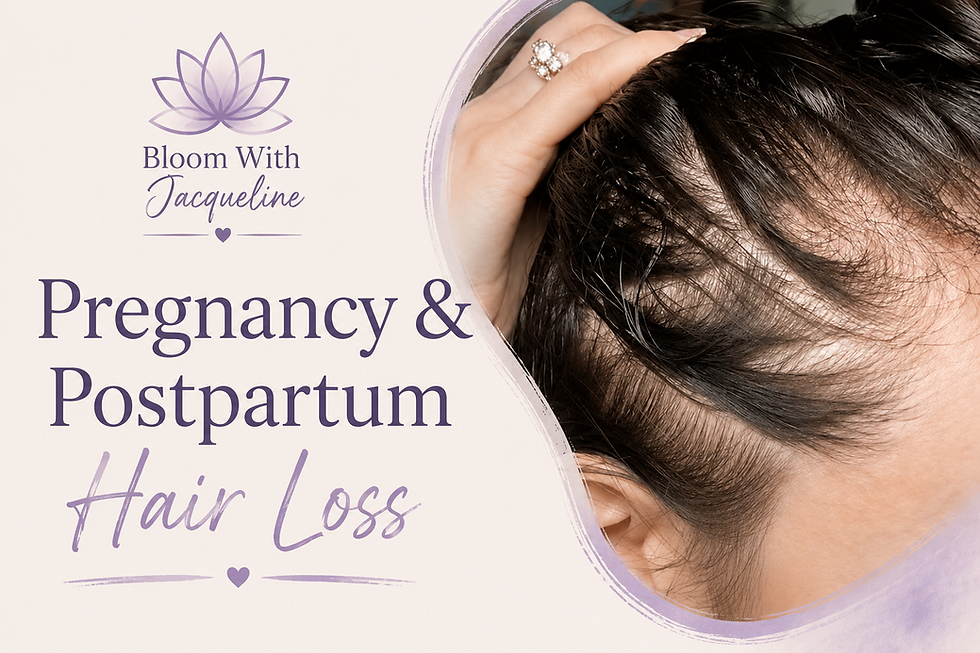
When we think about pregnancy, we're often shown images of glowing skin and thick, glossy hair. For many people, that is exactly what happens. But for others, the reality is very different.
During all three of my pregnancies, I lost patches of hair at the front of my head.
It wasn't something I expected, and it certainly wasn't something people talked about.
At a time when my body was already changing in countless ways, seeing my hair thin so noticeably affected my confidence and left me wondering whether what I was experiencing was normal. Pregnancy brings so many unexpected physical changes, from nausea and fatigue to changes in your skin and hair. If you're currently navigating early pregnancy, you may also find my article on Morning Sickness During Pregnancy helpful.
I've since spoken to many parents who have been surprised by the changes they've noticed in their hair, both during pregnancy and after birth.
The good news is that many hair changes are temporary and can be explained by the incredible hormonal shifts your body goes through. However, there are also times when hair loss deserves further investigation.
Let's look at what the evidence tells us.
Why Does Pregnancy Affect Your Hair?
Hair naturally follows a cycle consisting of three stages:
Growth (anagen)
Transition (catagen)
Resting and shedding (telogen)
At any one time, most of your hair is actively growing, while a smaller proportion is naturally shed each day.
During pregnancy, rising levels of oestrogen can prolong the growth phase. This means fewer hairs are shed, which is why many people notice thicker, fuller hair.
However, pregnancy doesn't affect everyone in the same way.
Some people notice their hair becoming thinner, drier or more fragile. Others, like me, experience noticeable hair loss during pregnancy itself.
Hair Loss During Pregnancy
Although less commonly discussed than postpartum hair loss, hair loss during pregnancy can happen.
Hormonal fluctuations may contribute, but pregnancy-related hair loss can also be associated with:
Iron deficiency
Thyroid disorders
Nutritional deficiencies
Physical or emotional stress
Certain medical conditions
Patchy hair loss is not considered a typical pregnancy symptom and should always be discussed with your midwife, GP or healthcare professional so that any underlying causes can be identified and treated if necessary.
Looking back, I wish I'd known that sooner.
Why Does Hair Fall Out After Birth?
One of the most common questions new parents ask is:
"Why am I losing so much hair after having my baby?"
The answer usually lies in hormones.
After birth, oestrogen levels fall rapidly. The hairs that remained in the growth phase during pregnancy move into the resting phase together before being shed over the following weeks and months.
This process is known as postpartum telogen effluvium.
Although it can feel dramatic, you're usually not losing more hair than normal. Instead, your body is shedding months' worth of hair that wasn't lost during pregnancy.
When Does Postpartum Hair Loss Start?
For most people:
Hair shedding begins around 2–4 months after birth
Hair loss often peaks between 3–6 months postpartum
Most people's hair gradually returns to its usual growth cycle within 6–12 months
You may also notice short regrowth hairs around your hairline as your hair begins to recover.
Can You Prevent Postpartum Hair Loss?
Unfortunately, there is no proven way to prevent hormonally driven postpartum hair shedding.
Many products claim to stop hair loss, but there is currently limited evidence that shampoos or supplements can prevent normal postpartum telogen effluvium.
What you can do is support your body's recovery by:
Eating a balanced, nutrient-rich diet where possible
Continuing postnatal vitamins if recommended by your healthcare professional
Avoiding very tight hairstyles that pull on the hair
Limiting excessive heat styling and harsh chemical treatments
Being gentle when brushing or washing your hair
Most importantly, give your body time.
When Should You See Your GP?
Although postpartum hair loss is usually normal, it's important to seek medical advice if:
Hair loss is patchy
Hair shedding is severe or worsening
Hair loss begins during pregnancy without explanation
It continues well beyond your baby's first birthday
You have symptoms such as extreme fatigue, weight changes, palpitations or other signs of thyroid disease or iron deficiency
A simple blood test may identify an underlying cause that can be treated.
Hair Loss Can Affect More Than Your Appearance
Hair loss isn't "just cosmetic."
For many new parents, it comes at a time when they're already adapting to huge physical, emotional and hormonal changes.
Your body has grown and birthed a baby.
You may be healing from birth, feeding around the clock, surviving on broken sleep and adjusting to a completely new identity.
Then one morning you look in the mirror and notice thinning hair or handfuls coming out in the shower.
Sometimes it can feel like one more thing has changed about the person looking back at you. While hormonal hair loss doesn't cause postnatal depression, struggling with changes to your body can sometimes add to an already emotionally challenging time. If you're finding the postpartum period particularly difficult, my blog Postnatal Depression: You're Not Alone explains the signs to look out for and why asking for support is a sign of strength, not weakness, those feelings are valid.
How a Doula Can Support You
A doula can't prevent hormonal hair loss, but we can support you.
While I can't stop hormonal changes, I can support you through them. From holding your baby while you enjoy a hot shower to offering reassurance and practical help during those early weeks, a doula's role is to care for you as you care for your baby. You can find out more about what that support looks like on my Why Choose a Doula? page.
Pregnancy, birth and the postnatal period change us in countless ways; physically, emotionally and mentally. You don't have to navigate those changes alone.
The early weeks after birth are often called the Fourth Trimester because your baby, and you, are still adjusting to life outside the womb.
If you'd like to learn more about this important period, read my blog The Fourth Trimester: What Nobody Tells You About the First 12 Weeks After Birth.
Supporting Families Across Wiltshire and Beyond
At Bloom With Jacqueline, I provide warm, compassionate birth and postnatal doula support for families in Chippenham and across Wiltshire and South Gloucestershire, as well as remote support throughout the UK.
Whether you're preparing for birth or finding your feet after your baby arrives, my role is to offer evidence-based information, practical help and emotional reassurance, so you feel supported every step of the way.
If you'd like to find out more about how I can support your pregnancy, birth or postpartum journey, I'd love to hear from you.
Click here to arrange a free, no-obligation discovery call.


Comments