
Having a Baby Without Family Nearby: A Practical Plan for the First Six Weeks
Updated: 4 days ago

When you are having a baby without family nearby, preparing for the early weeks can bring some very practical questions.
Who will look after your older children when labour begins? What will you eat when nobody has the energy to cook? How will you manage once your partner returns to work?
You may have loving family who would help in a heartbeat, but they live several hours away. Perhaps you have recently moved, are part of a military family or are preparing for parenthood somewhere that still feels unfamiliar.
Planning for a baby without family nearby starts with organising everyday help: meals, household tasks, care for older children, supportive visits and someone to turn to when you need reassurance.
Making a few arrangements during pregnancy can take some decisions off your plate after birth. Your plan can be simple, flexible and built around what would help you feel cared for.
Why this is personal to me
We were a military family for almost 20 years, so raising children away from family was a familiar part of our life.
I understand the practical side of moving somewhere new, but also the emotional side. The wish that someone you love could pop round for a cuppa, notice you are exhausted and stay long enough for you to have a shower.
With my first baby, we were living in Cyprus. He experienced severe colic for around four months, and I remember the long drives across the island trying to settle him. Those early months could feel exhausting, especially with familiar support so far away.
One person who made an enormous difference was Penny, a Home-Start volunteer who supported me. Her kindness and presence have stayed with me. Having someone who listened without judgement and helped me feel less alone mattered so much.
That experience is a big part of why I became a doula. I remember how it felt to need someone in my corner, and I want other mums to know they deserve that care too.
These are the practical conversations I would encourage you to have before your baby arrives.
1. Arrange help for when labour begins
If you have older children, start by thinking about who could care for them at different times of day or night.
A relative who lives four hours away may be part of your plan, but you might also need someone closer who can help until they arrive.
Consider:
Who could come over at short notice, including overnight?
Could your children stay with someone they already know?
Who could manage school or nursery collections?
What would happen if your first-choice person was unavailable?
Who could feed or walk pets?
How would you get to your planned place of birth?
Write down the arrangements somewhere easy to find. Include contact numbers, collection permissions, routines and any information your children’s carer might need.
If you have a birth partner, involve them in organising this. You deserve to approach birth without being the only person holding every detail in your head.
My birth preparation and doula support packages include options for talking through your preferences, your birth partner’s role and preparation for life with your newborn.
2. Make food easy to reach and easy to prepare
When you picture the first days with your baby, think about breakfast and lunch as well as dinner.
It is easy to arrange a few evening meals and forget that you will still need something to eat while feeding, recovering or caring for older children during the day.
You could:
Freeze a few meals in individual or family portions.
Keep simple breakfast and lunch ingredients available.
Put easy snacks within reach of where you expect to feed your baby.
Save a regular online shopping list.
Ask someone else to take responsibility for checking what needs replacing.
You do not need a freezer full of homemade food. Soup, toast, ready meals and food brought by friends can all have a place.
If faraway family ask what they can do, give them a specific option:
“An online food shop would be really helpful.”
“Could you arrange a meal for the evening we come home?”
“When you visit, would you make a few lunches we can keep in the fridge?”
Support can still reach you when the person offering it cannot.
3. Decide who will take care of everyday jobs
Washing, shopping, bins, appointments and school uniforms do not disappear when a baby arrives.
During pregnancy, talk about which tasks need to happen, who will take responsibility for them and what can wait.
If you have a partner, aim to share the noticing and organising as well as the doing. Being asked to write a list, delegate every task and check it has happened can become another job.
For example, someone taking responsibility for the washing means noticing the basket is full, putting a load on and making sure there are clean clothes available.
If you are parenting on your own, think about whether a trusted friend, neighbour or relative could take on one regular task. A predictable offer, such as collecting shopping each Tuesday, may be easier to plan around than “Let me know if you need anything.”
You can explore this further in my article on sharing the mental load of pregnancy.
4. Agree what helpful family visits will look like
When loved ones live far away, a visit can feel precious. It can also involve travel arrangements, overnight stays and the feeling that you should make everyone comfortable.
It is okay to talk about expectations before your baby arrives.
Think about:
Whether visitors will stay with you or elsewhere.
How long visits might last.
Whether you would like time at home before anyone arrives.
What practical help you would welcome.
How you will let people know if you need to change plans.
You might say:
“We would love to see you. We’ll need to keep things flexible, and help with meals and the washing would mean a lot.”
Or:
“We’re going to decide when we feel ready for visitors after the baby arrives. We’ll keep you updated.”
You can enjoy seeing your family and still need quiet, privacy and rest. You are allowed to say what would make a visit work for you.
5. Plan for your partner’s return to work
If your partner will be taking leave, their return to work deserves a conversation before it happens. Look at what a typical day might involve. Where could things feel most stretched?
Perhaps it is getting an older child ready for school while your baby needs feeding. Perhaps it is lunchtime, when you realise you have not eaten. Or the long afternoon when you would welcome another adult to talk to.
Choose a few practical arrangements, such as:
Preparing breakfast and lunch before your partner leaves.
Sharing school or nursery arrangements.
Booking a regular visit from someone you trust.
Agreeing who will organise dinner.
Making space for both of you to talk about how things are going.
If you are parenting alone, or your partner works away, travels or is deployed, you may want to make these arrangements from the beginning.
A postnatal doula can be one option for practical help and company. You can read about what postnatal doula support looks like, including time to rest, a listening ear and help with everyday tasks.
6. Keep useful contacts together
Trying to find the right number while tired and worried can feel like a lot.
Before birth, save the contact details your maternity team gives you, along with information about local feeding support and other services you may want to use.
Your list could include:
Your maternity service’s advice and urgent contact numbers.
Your midwife and, when available, your health visiting team.
Your GP surgery.
Local infant feeding support.
Trusted people you can call for practical help.
Any community or professional support you have arranged.
Ask your midwife about what support is available locally and how to access it.
For families in Chippenham, Wiltshire and surrounding areas, my Local Pregnancy, Birth & Family Directory can help you explore services. Check current arrangements directly with providers.
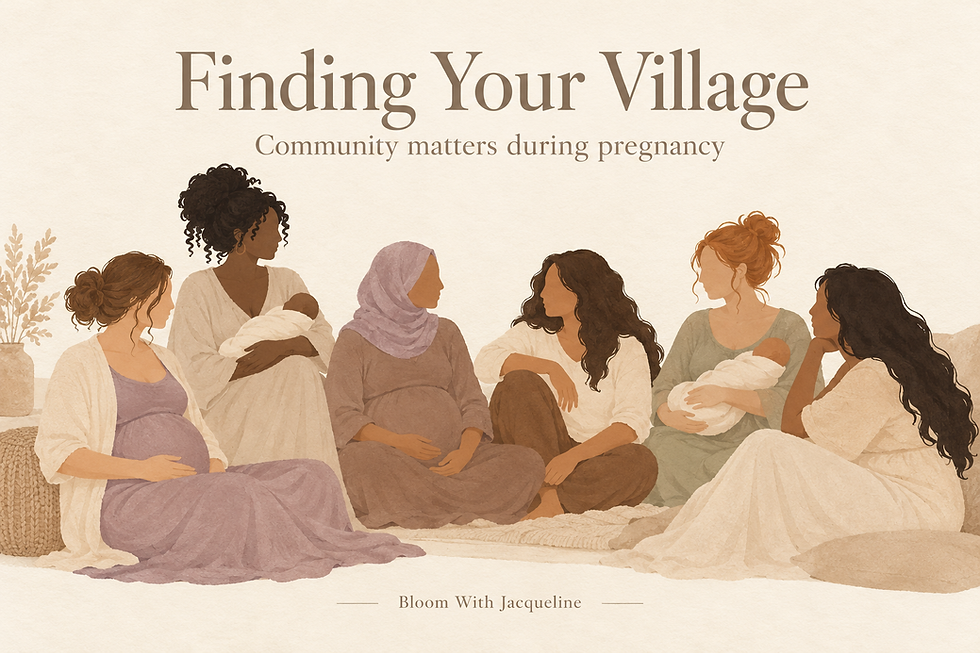
If meeting people locally is also on your mind, you can find more encouragement and ideas in my blog, including Community Matters: Finding Your Village During Pregnancy.
7. Make a backup plan that is easy to use
People become unwell. Visits change. Babies arrive before relatives have packed their bags.
A backup plan can be as simple as having a second person to contact and knowing which tasks can be dropped.
Ask yourselves:
If our planned help falls through, what would we need most that day?
That might be food, a school collection or someone to sit with you for an hour.
Keep the essentials clear, and give yourself permission to let other things wait. A tidy house and a full social diary do not need to be priorities in those early weeks.
If paid support is an option, you could explore availability during pregnancy. If it is not, ask your midwife, health visitor or local family hub about community and charitable support, including any eligibility requirements.
A gentle framework for the first six weeks
These are planning prompts, rather than milestones you need to reach. Your needs may change, and your support can change with them.
Time | What you could arrange |
|---|---|
Before birth | Labour arrangements, care for older children, food, useful contacts and expectations for visits. |
The first few days | Someone to organise meals, handle essential tasks and help you follow up on any questions for your maternity team. |
Weeks one and two | Regular practical help, flexible visits and someone who checks how you are feeling. |
Weeks three and four | Extra help around a partner’s return to work, school runs or times of day you find difficult. |
Weeks five and six | A conversation about what is helping, what needs adjusting and what ongoing support you would welcome. |
There is no deadline for feeling settled, and support does not have to end at six weeks.
Where a doula can fit into your postnatal plan
As a doula, I help families think about the person recovering from birth as well as the baby they are welcoming. That might mean preparing during pregnancy, then offering practical and emotional support at home once your baby arrives.
On a postnatal visit, I might make you lunch, listen while you talk through your experience, help with light household tasks or care for your baby while you shower or rest.
I can also help you find appropriate information and signpost you to other professionals. Your midwife, health visitor, GP and other healthcare professionals remain responsible for clinical care.
At Bloom With Jacqueline, I offer doula support in Wiltshire, including Chippenham and surrounding areas, alongside support in South Gloucestershire. Remote doula support is also available throughout the UK for families who would welcome preparation, conversation and reassurance from a distance.
Start with one helpful conversation
You do not need to organise six weeks of life in one sitting.
Start with one question:
“What would help me feel cared for when we bring our baby home?”
Then choose one arrangement to make this week.
Ask someone about a school run. Talk about visiting plans. Save the feeding support number. Decide who will organise the food shop.
If you are struggling emotionally, tell your midwife, health visitor or GP. Practical help matters, and you also deserve appropriate support for how you are feeling. You can read more in my article on postnatal depression and finding support.
I know how much one reliable person can mean when family are far away. You deserve people who care about how you are doing, as well as how your baby is doing.
Your free starting point
My FREE First Week With Baby Checklist can help you begin planning meals, visitors, rest and support for you.
Use it on your own, with your partner or as a starting point for a conversation with the people who want to help. Receiving the checklist does not require you to subscribe to ongoing emails.
For more gentle, practical guidance, subscribe through my blog page. I share occasional pregnancy, birth and postnatal tips, new articles and Bloom With Jacqueline news. You can unsubscribe at any time.
If you would like to talk about support for your own family, you are welcome to arrange a FREE, no-obligation discovery call, or email enquiries@bloomwithjacqueline.co.uk.
Jacqueline x
Bloom With Jacqueline
Further reading: NHS guidance for the early weeks with your baby
For personalised support, explore personalised doula support in Chippenham and Wiltshire with Bloom With Jacqueline.
You are always welcome to arrange a free, no-obligation discovery call.


Comments